Understanding the Smartwatch Glyph Icon: A Practical Guide for Designers and Developers
In the digital landscape, the smartwatch has evolved from a niche gadget to a ubiquitous accessory. Consequently, the need for clear, scalable, and versatile visual representations of this device is higher than ever. A Smartwatch Glyph Icon serves as a fundamental visual shorthand, communicating concepts related to wearable technology, fitness tracking, time management, and connectivity. However, not all icons are created equal. The utility of an icon set depends heavily on its technical specifications, file format diversity, and adaptability across various mediums. This article explores the characteristics of a high-quality smartwatch glyph icon set, evaluating its features, use cases, and how it compares to other visual resources.
Defining the Smartwatch Glyph Icon Style
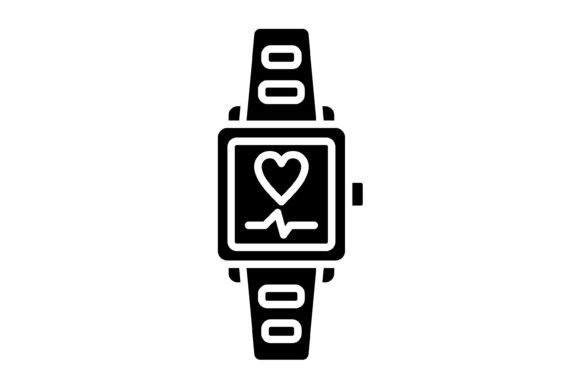
A "glyph" icon is typically characterized by its solid, monochromatic form. Unlike realistic illustrations or skeuomorphic designs that mimic 3D textures and lighting, glyphs focus on distinct silhouettes and simplified geometry. The Smartwatch Glyph Icon approach prioritizes instant recognition over artistic detail.
The primary distinction of a glyph style is its versatility. Because it relies on a single color (often black or white, though easily customizable), it integrates seamlessly into diverse user interfaces without clashing with an existing color palette. This style aligns with modern design trends that favor minimalism and functional clarity. When a user sees a smartwatch glyph, they do not need to process complex visual data; the shape alone conveys the meaning of "wearable tech" or "health monitoring."
The Critical Role of File Format Diversity
When evaluating icon resources, the specific file formats included in the package are often more important than the visual design itself. A robust Smartwatch Glyph Icon package typically includes a variety of formats to accommodate different workflows. A standard high-quality pack might include AI, EPS, JPG, PNG, and SVG files.
Understanding the function of each format helps in assessing the value of the resource:
- Vector Formats (AI, EPS, SVG): These are the most critical for professional design. Vector files use mathematical equations rather than pixels to draw shapes. This means a Smartwatch Glyph Icon can be scaled from the size of a watch face to a billboard without losing quality. The SVG (Scalable Vector Graphics) format is particularly vital for web and mobile app development because it offers small file sizes and high resolution on any screen density.
- Raster Formats (JPG, PNG): While vectors are superior for editing, raster formats are necessary for immediate use. PNG files are essential because they support transparency. A Smartwatch Glyph Icon in PNG format allows designers to place the icon over complex backgrounds or photographs without a white box surrounding it. JPG files are useful for presentations or documents where transparency is not required and file size needs to be minimized.
The inclusion of a transparent background in the PNG and SVG files is a non-negotiable feature for modern UI design, allowing the icon to float naturally within a layout.
Evaluating Usability and Scalability
The utility of a Smartwatch Glyph Icon set is defined by its readiness for deployment. The claim of being "ready to use for all devices and platforms" hinges on the vector quality mentioned above. In the context of mobile apps and websites, icons must render crisply on high-DPI displays (like Apple's Retina displays or high-end Android screens). Pixelated icons can ruin the professionalism of an interface.
Furthermore, the "100 vector icons" feature suggests a comprehensive library. A single smartwatch icon is rarely sufficient for a complex application. A developer might need different states or related concepts, such as:
- Connectivity: A smartwatch icon paired with a signal wave.
- Health: A smartwatch icon combined with a heartbeat line.
- Settings: A smartwatch icon with a gear overlay.
Having a set of 100 related icons ensures visual consistency across an entire project. If a designer uses a Smartwatch Glyph Icon for the main dashboard but has to switch to a different stylistic set for the settings menu, the user experience feels disjointed. A cohesive set solves this problem.
Comparing Glyph Icons to Other Visual Options
When sourcing a smartwatch visual, creators usually compare three main categories: stock photography, detailed illustrations, and glyph icons.
Stock Photography offers realism but often lacks flexibility. You cannot easily change the color of a watch band in a photo, and photos can become dated quickly as hardware designs change. They also tend to have large file sizes and can slow down website loading times.
Detailed Illustrations offer a unique brand personality but can be visually "busy." In a dense user interface, a detailed illustration of a smartwatch can distract the user from the content or function it is meant to represent.
The Smartwatch Glyph Icon strikes a balance. It is functional rather than decorative. It is the best fit for UI/UX design, technical documentation, and minimalist branding. However, it may be the wrong choice if the goal is to showcase the physical hardware in a realistic product catalog. In that scenario, photography is superior.
Practical Applications and Best-Fit Scenarios
The versatility of the Smartwatch Glyph Icon makes it suitable for a wide range of applications, but it excels in specific areas.
- Mobile App Navigation: In a mobile health or fitness app, a small, crisp smartwatch glyph is perfect for the bottom navigation bar or a settings menu. It communicates "wearable sync" without taking up valuable screen real estate.
- Web Design and Templates: For tech blogs, SaaS landing pages, or e-commerce sites selling accessories, these icons serve as visual anchors for feature lists. They help break up text and guide the reader's eye to key benefits.
- Presentations and Pitch Decks: When presenting data about IoT (Internet of Things) or wearable market trends, a clean Smartwatch Glyph Icon adds a professional touch to slides without overwhelming the data.
- Print Media: Because the set includes vector formats (AI/EPS), the icons can be used in high-resolution print materials like brochures or packaging labels without any loss of sharpness.
Decision Factors: When to Choose This Resource
Choosing a Smartwatch Glyph Icon set is a practical decision based on workflow efficiency. If you are a developer or designer who values editability, the inclusion of AI and EPS files is a significant advantage. These formats allow you to open the icon in Adobe Illustrator and modify the paths, adjust stroke weights, or combine elements to create custom graphics.
However, users should consider the "glyph" aesthetic limitation. If your brand identity relies on soft, 3D visuals or vibrant gradients, a flat, monochromatic glyph might feel out of place unless it is customized. The benefit here is that "easy to edit" features allow you to convert these black-and-white glyphs into colored icons that match your specific brand guidelines.
Ultimately, the Smartwatch Glyph Icon